
Caring for a loved one with special needs can feel overwhelming, especially when managing healthcare costs. We understand how difficult it can be and have worked with many families to manage these challenges.
A Special Needs Trust Healthcare provides support by covering necessary medical and daily care expenses while safeguarding government benefits like Medicaid or Supplemental Security Income.
It’s a way to help better your loved one’s quality of life and bring some peace of mind. Keep reading!
What is a Special Needs Trust?
A Special Needs Trust (SNT) supports people with disabilities. It helps pay for needs without affecting Medicaid or Supplemental Security Income (SSI). This trust is a key tool in special needs planning.
It holds assets, like money or property, for the benefit of a disabled person.
We use an SNT to cover costs that government programs do not pay for. These may include medical care, therapy, housing upgrades, or even assistive devices. “An SNT bridges the gap between basic coverage and true quality of life,” as many experts explain.
Families can protect their loved one’s financial future while keeping access to public benefits through proper trust structuring in New Jersey.
Types of Special Needs Trusts
Special Needs Trusts come in different forms, each serving unique purposes. Let’s examine how these trusts can provide support for loved ones with disabilities.
First-Party Special Needs Trusts
A first-party special needs trust holds the beneficiary’s own assets. This could include money from a personal injury settlement, savings, or inheritance. The trust must be set up before the individual turns 65.
It is also called a “payback trust,” as Medicaid gets reimbursed for expenses after the beneficiary passes away.
We use this type of trust to protect eligibility for Medicaid and Supplemental Security Income (SSI). Funds in the trust can pay for medical care, therapy, assistive devices, or other supplemental needs not covered by government benefits.
Next comes third-party special needs trusts!
Third-Party Special Needs Trusts
A third-party special needs trust helps protect a loved one with a disability. The person creating the trust, often a parent or grandparent, uses their own assets to fund it. This ensures the beneficiary can keep government benefits like Medicaid or Supplemental Security Income.
Funds in this type of trust are not counted as the beneficiary’s assets. The grantor decides how to distribute any remaining trust assets after the beneficiary passes away. Unlike first-party trusts, no payback to Medicaid is required for funds used from this trust during the person’s lifetime.
Pooled Special Needs Trusts
Pooled Special Needs Trusts bring together funds from multiple individuals with disabilities. A nonprofit organization oversees the trust. Each person maintains their own account, while the money is combined for investment purposes to lower expenses.
This type of trust supports those who may lack sufficient assets for a standalone trust.
We suggest this option for residents in New Jersey who aim to maintain Medicaid or Social Security benefits. The funds can cover additional care, therapy, or other necessities not funded by government programs.
These trusts are frequently chosen when someone over 65 wishes to establish a special needs plan while retaining important services.
A pooled trust provides both affordability and assurance for beneficiaries and their families.
Healthcare Essentials Covered by a Special Needs Trust
A special needs trust can help cover many healthcare costs, read on to understand how it supports a loved one’s unique needs.
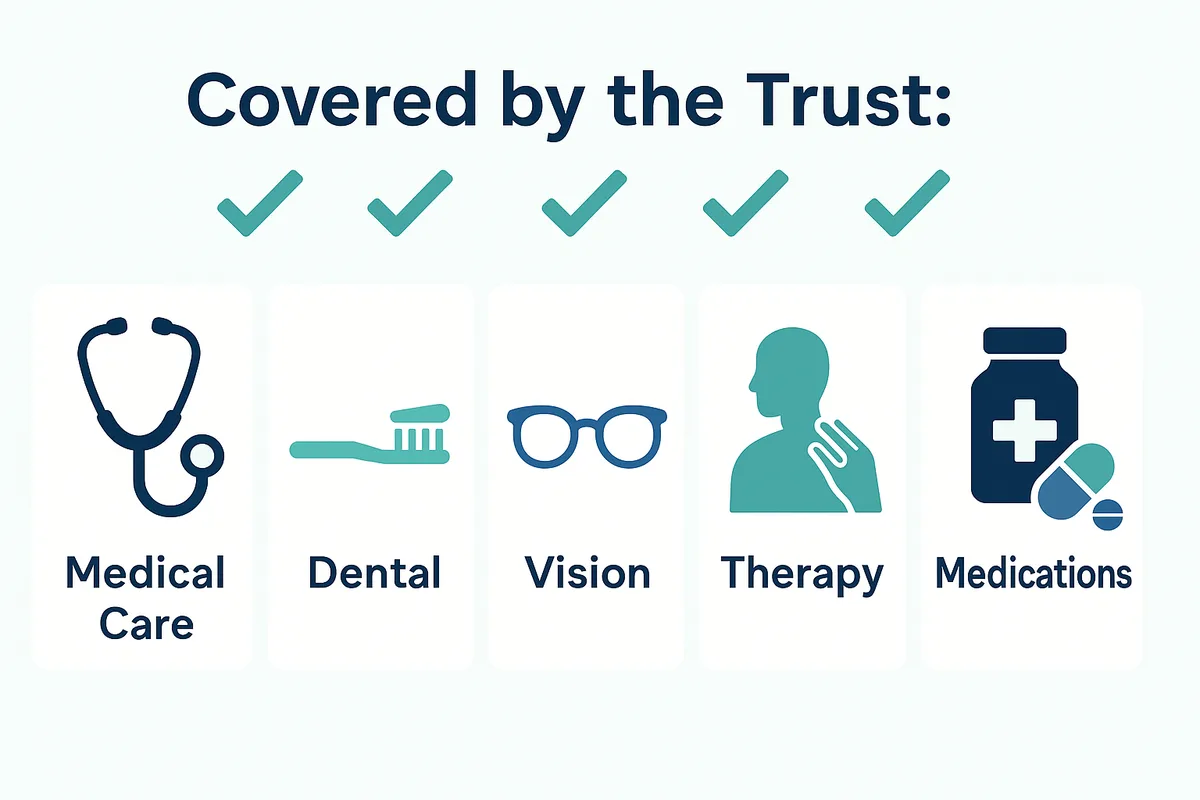
Medical, Dental, and Vision Care
We can use special needs trust funds for medical care that Medicaid or other insurance will not cover. This might include therapies, treatments, or medications that improve the beneficiary’s quality of life.
Regular checkups and specialized care also fall under this category.
Dental expenses, like cleanings or dental surgeries, can be covered using these trust funds. Vision care is included too. Glasses, eye exams, or even procedures like cataract surgery may qualify as expenses paid through the trust.
These funds give flexibility to meet specific health needs without risking government benefits like Medicaid.
Assistive Devices and Equipment
Special needs trusts can cover items like wheelchairs, hearing aids, and communication devices. Funds may also pay for specialized vehicles made to help those with mobility challenges.
These tools improve daily life and promote independence.
The trust allows us to plan for the beneficiary’s unique needs without risking Medicaid or other benefits. Proper funding ensures the beneficiary gets what they need when they need it.
Next, let’s look at how home modifications make living spaces more accessible.
Home Modifications for Accessibility
Funds from a special needs trust can pay for home modifications. These changes make living spaces safer and easier for individuals with disabilities. For example, trust funds may cover the cost of installing ramps, widening doorways, or lowering countertops.
A wheelchair-accessible bathroom is another common need. Adding grab bars or roll-in showers helps promote independence at home. Trusts ensure these upgrades do not risk Medicaid or other government benefits.
Let’s look at how trustees manage healthcare needs next.
Role of the Trustee in Managing Healthcare Needs
The trustee of a special needs trust plays a big role in handling healthcare needs. They manage the assets in the trust, making sure funds meet the beneficiary’s medical and personal care costs.
These may include dental visits, vision checks, or even items like hearing aids. The trustee must also make sure Medicaid and other government benefits stay unaffected by how they use trust money.
A clear letter of intent helps guide the trustee. This document explains the beneficiary’s daily routines, preferences, and ongoing health needs. If family help is not available, trustees might hire professional care managers to coordinate services or treatments.
All decisions should follow the terms in the trust document while keeping legal compliance in mind.
Importance of a Letter of Intent for Healthcare Guidance
A letter of intent helps keep healthcare decisions clear. It lists the beneficiary’s daily needs, routines, and preferences. This document gives us a better way to plan their care.
Trustees can use it as a guide when making choices about treatments or services. It also ensures that decisions match the personal wishes of an individual with a disability.
This letter makes communication easier for caregivers, doctors, and family members. In emergencies, it gives quick access to important details about the person’s background and health needs.
A well-prepared letter is like having instructions ready for all situations. By including detailed notes, we make sure the trust serves the person’s unique healthcare goals properly while protecting government benefits such as Medicaid or Medicare in New Jersey.
Maximizing Benefits Through Proper Trust Structuring
Proper structuring of a special needs trust is key to keeping government benefits while meeting the beneficiary’s needs. We must ensure the trust complies with all legal rules, like creating an irrevocable trust and using its funds only for allowable expenses.
For example, distributions from the fund should pay for items not covered by Medicaid or Medicare, such as dental care or vision aids.
We also need to think about who oversees the trust. Choosing the right trustee ensures funds are managed wisely and used correctly. The grantor of the trust decides how unused assets will be distributed when it ends.
These choices protect both current benefits and future security for your loved one in New Jersey.
Common Mistakes to Avoid in Healthcare Planning
Mistakes in healthcare planning can hurt both finances and care. We must plan wisely to protect benefits and meet specific needs.
- Ignoring Medicaid rules leads to trouble. Assets in a special needs trust must not affect Medicaid eligibility.
- Leaving the trust poorly managed can cause issues. Trustees must follow the trust agreement and legal guidelines when using funds.
- Forgetting uncovered medical costs harms the beneficiary’s health. Special Needs Trusts are there to cover items like dental care, vision, or assistive devices.
- Failing to include a letter of intent creates confusion for trustees. A clear letter helps guide them on what the beneficiary needs.
- Overlooking first-party and third-party trusts can lead to errors in funding plans. Each type works differently depending on who places assets into the trust.
- Putting too much trust in family without professional help risks mistakes with distributions or tax issues. Hiring an expert ensures proper management.
- Skipping estate planning leaves gaps in long-term care plans for children with disabilities or chronic conditions. A will or life insurance policy should clearly state how assets will fund a Special Needs Trust.
- Waiting too long to set up a Special Needs Trust increases difficulties later on, especially after age 65 when restrictions apply under certain rules.
Make sure we consider all these points as we discuss trustee roles next!
Conclusion
A Special Needs Trust can make life better for someone with disabilities. It helps cover healthcare while keeping government benefits safe. With careful planning, we can ensure the funds meet real needs.
Let’s work together to secure a brighter future for loved ones. Reach out to us today, and we’ll help guide you every step of the way!
FAQs
1. What is a special needs trust?
A special needs trust is a legal arrangement that helps manage funds for a person with a disability while protecting their eligibility for government benefits like Social Security and Medicare.
2. How does a special needs trust work?
The trust is funded with assets, such as cash or life insurance policies, and managed by a trustee to meet the beneficiary’s needs without affecting their access to public assistance programs.
3. What are the main types of special needs trusts?
There are two main types: first-party and third-party special needs trusts. A first-party trust uses the beneficiary’s own assets, while a third-party trust is created using someone else’s funds, like from parents or family members.
4. Can distributions from a special needs trust be used for basic living expenses?
Yes, but they must follow strict rules set by programs like Social Security Administration to avoid reducing benefits. The funds can cover supplemental costs not provided by these programs.
5. Who creates and manages the trust?
A grantor creates the trust, often through an estate planning attorney or in their will. The trustee manages it according to its terms and ensures it meets the beneficiary’s financial and healthcare-related needs.
6. What happens when the beneficiary turns 65 or passes away?
If properly established before age 65, the trust remains valid after that age but cannot accept new funding from certain sources. When the beneficiary dies, any remaining assets may go to creditors or other individuals named in the terms of the trust unless otherwise specified in law.